
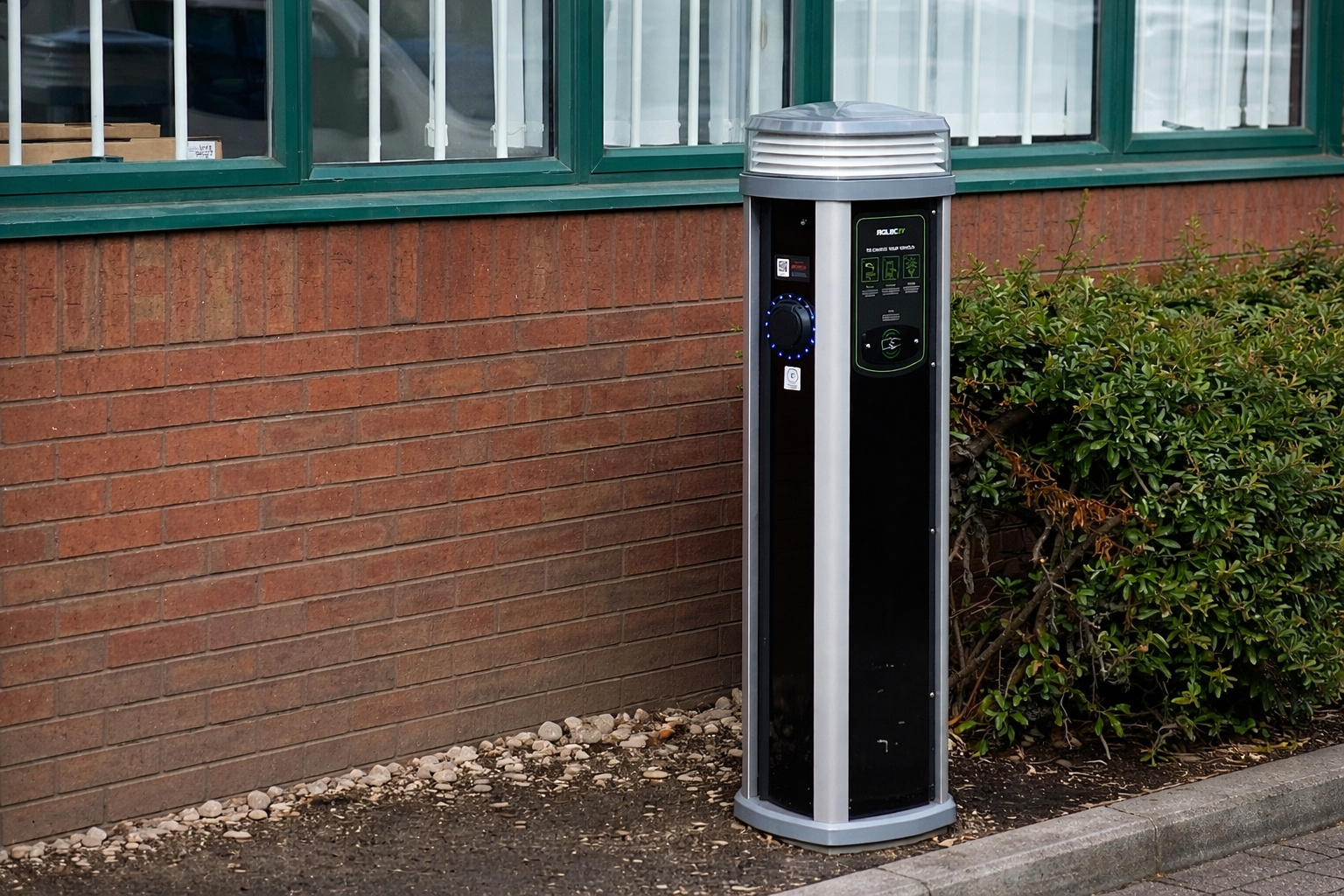
EV chargepoint grants
Several OZEV grants are available to reduce the cost of installing compliant EV chargers at rented homes, flats, landlord-managed properties, business sites and home-based limited companies. Each scheme has its own rules, but they all rely on a working combination of eligible vehicle, approved installer, approved chargepoint model and documented parking arrangements. A survey confirms which scheme applies, what evidence is required and how the installation can be routed safely and compliantly.
Which grants you can use
Most properties fall into one of three categories: tenants and flat owners, landlords, or businesses (including home-based limited companies). Each group has access to specific OZEV schemes with different rules for eligibility, funding limits and evidence. All schemes require an eligible vehicle where applicable, an OZEV-approved installer and an approved chargepoint model. The grant is always claimed through the installer.
Renters & Flat Owners Grant
Who qualifies?
Tenants in houses or flats, and flat owner-occupiers with suitable parking
Funding
Up to £350 per socket, capped at 75% of the installation cost
Vehicle eligibility
The vehicle must be on the OZEV eligible vehicle list
On-street options
Cross-pavement support available for household on-street parking
Claim process
The grant is deducted from your invoice; we submit the evidence
Landlord Chargepoint Grant
Eligibility
Landlord must have a Companies House number or VAT registration
Funding
Up to £350 per socket for homes and flats you let out
Property types
Supported for houses, flats and multi-unit residential sites
Annual limits
Up to 200 residential and 100 commercial grants per financial year
Infrastructure support
Infrastructure grants available for cabling, containment and future bays
Workplace Charge Scheme (WCS)
Funding
Up to £350 per socket, supporting up to 40 sockets per applicant
Who can apply?
Businesses, charities, public bodies and home-registered limited companies
Use cases
Staff charging, fleet charging and mixed-use commercial premises
Infrastructure grant
Covers civils, cabling, power upgrades and bay preparation
Claim process
Installer-led submission; no customer reimbursement required
The grant process and installation
Grant-supported installs follow a structured path because each scheme has specific evidence and compliance requirements. We confirm eligibility, check permissions and verify vehicle and charger requirements before anything is booked in. The survey covers routing, containment, charger position and supply capacity, especially important in London properties where access routes and shared spaces can affect the installation method. Once the charger is installed and commissioned, we submit the evidence through the correct OZEV route so the grant is applied automatically. Renters and flat owners see the grant deducted directly from the invoice, while businesses receive a voucher and we claim against it after commissioning.
Eligibility checks
Confirm the correct scheme, vehicle eligibility and charger compliance
Survey
Review cable routes, containment, charger position and supply capacity
Permissions
Identify landlord, freeholder or managing agent approvals where required
Installation
Install, test and commission the charger to current standards
Claim submission
Submit OZEV evidence and issue the final installation documents
Grant rules often interact with specific constraints such as communal access routes, mixed-use buildings, basement parking and older electrical infrastructure. The survey identifies containment requirements, accessible routes for cabling and how the charger will integrate with the existing supply and protective devices. For landlords and workplaces, there are also infrastructure grants that support enabling works for future expansion, including contributions per parking bay enabled. If the property, vehicle or business does not qualify for a grant, we confirm this early and offer a standard installation route with the same technical detail and process.
Additional information
Frequently Asked Questions
-
Yes. Tenants renting houses qualify for the renters grant. Landlords can claim for houses they let out if they have a Companies House number or VAT registration. Home-registered limited companies can use WCS if charging relates to business use.
-
Not always. Most schemes require a defined parking space, but the cross-pavement household grant supports on-street parking when an approved cable-routing solution is installed. Please note however that not all councils will support this grant.
-
Most schemes contribute up to £350 per socket. WCS supports up to 40 sockets per applicant. Landlords can claim up to 200 residential and 100 commercial chargepoint grants per year. Infrastructure grants support civils, cabling and bay preparation for multi-bay sites.
-
For the renters and flat owners grant, the vehicle must appear on the OZEV eligible vehicle list. For the Landlord and WCS grants there is no vehicle eligibility criteria.
-
We do. All OZEV schemes require installer submission through the correct route. Customers never reclaim money themselves and never have to pay it upfront.
-
Tenants and flat owners usually need written permission from the landlord, freeholder or managing agent. Businesses must have authority to install at the premises.
-
Yes. Most schemes support multiple sockets within their limits, and infrastructure grants can support enabling works for future expansion.
Check your eligibility
A short survey or chat will confirm which grant applies to your property or business and how the charger can be installed safely and compliantly.