
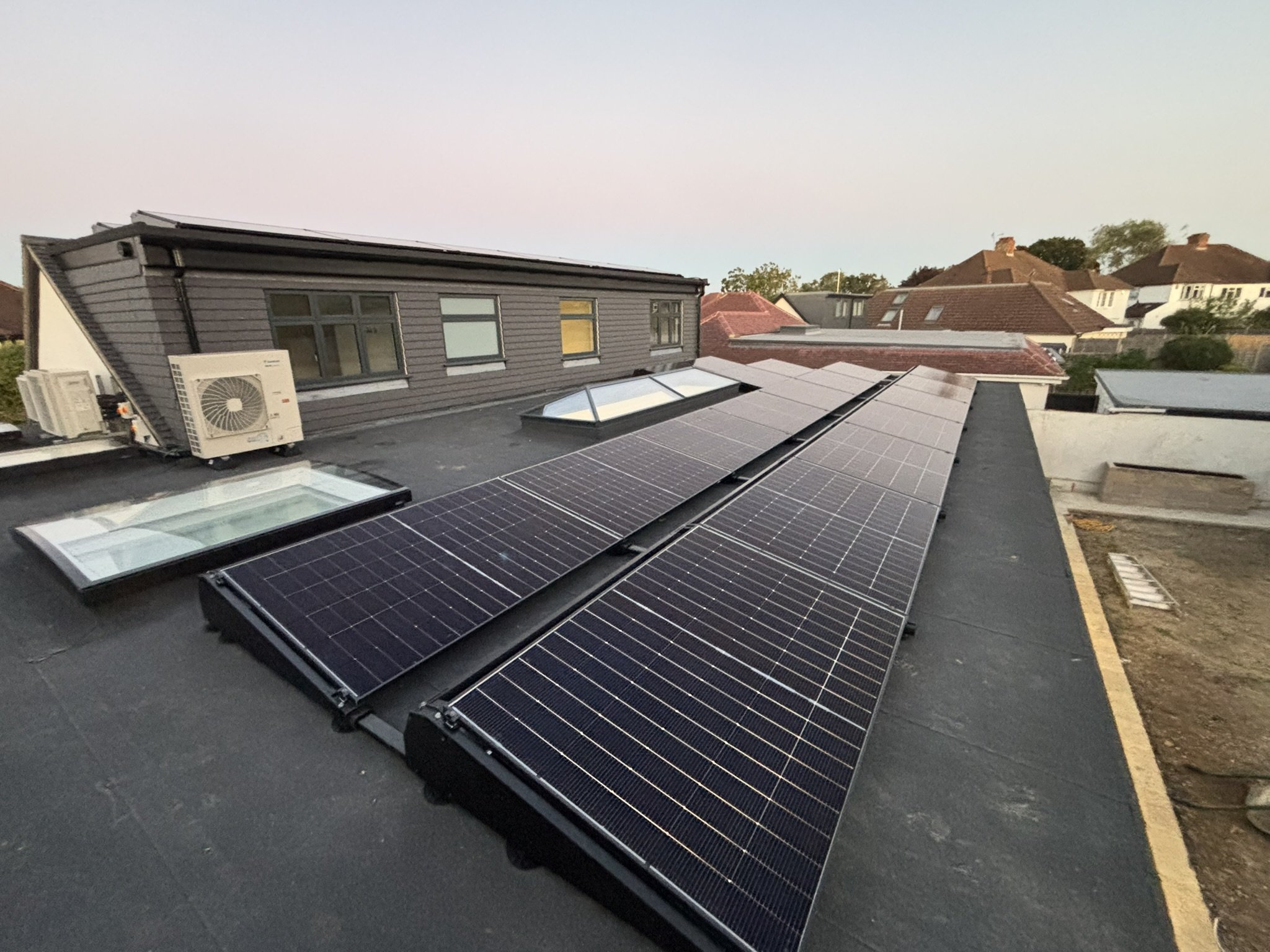
Solar panels for homes — with battery storage when it makes sense
We design and install domestic solar PV systems across London and the South East, with optional battery storage tailored to how you actually use electricity.
Whether you’re installing solar for the first time or adding a battery to an existing system, our surveys focus on real savings and practical design — not assumptions or generic system sizes.
How most homes install solar today
Domestic solar installations have changed. Most homeowners now expect battery storage alongside their panels — but the right setup still depends on how you use electricity, not a one-size-fits-all package.
Our approach is simple: we start with your home, your usage, and your goals, then design a system that makes sense now and in the long term.
Solar panels sized to suit your roof, orientation, and household electricity use
Optional battery storage to increase self-consumption and reduce grid reliance
Systems designed to work with modern electricity tariffs and future EV charging
Battery-ready designs for homeowners planning to add storage later
Clear advice on when a battery adds real value — and when it doesn’t
Survey-led design focused on practical savings, not generic system sizes
If you already have solar panels installed, you don’t need to start again. Many existing systems can be upgraded with battery storage following a compatibility check during the survey.
Already have solar panels? You may want to explore our Solar Batteries page.
What’s included with every solar installation
Every home is different, but our approach is consistent. All solar installations include a full survey, careful system design, and a professional installation focused on safety, performance, and long-term reliability.
We don’t install off-the-shelf packages. Each system is designed around your property, your usage, and how you plan to use electricity in the future.
Full site survey including roof suitability, shading, and electrical capacity
System design tailored to your household electricity usage and future plans
Supply and installation of solar panels, mounting systems, and inverter equipment
Battery-ready designs with clear advice on storage options where appropriate
Testing, commissioning, and certification to current UK standards
Clear handover, system walkthrough, and documentation on completion
Our installations are carried out by qualified electricians and designed to integrate cleanly with your existing electrical system, with safety, compliance, and long-term performance built in from day one.
Is solar right for your home?
Most homes are suitable for solar panels, but a good installation starts with understanding how your property and household actually use electricity.
During the survey, we look beyond roof space alone — factoring in orientation, shading, daily usage patterns, and how you plan to use energy in the future.
Suitable roof space with good orientation and minimal shading
Daytime or evening electricity usage that benefits from self-generation or storage
Homes with EV chargers, heat pumps, or increasing electricity demand
Properties where battery storage can reduce grid reliance and export waste
Existing solar systems that can be upgraded with battery storage
Homeowners looking for long-term bill reduction rather than short-term gains
If solar isn’t right for your home, we’ll tell you. In some cases, homeowners may still benefit from a battery-only installation — particularly where electricity usage, tariffs, or existing solar systems make storage worthwhile.
You can learn more on our Solar Batteries page.
Battery storage: when it makes sense
Battery storage is now a common part of domestic solar installations, but it isn’t automatically right for every home. The value of a battery depends on how and when you use electricity, not just how much solar you generate.
During the survey, we look at whether storage will genuinely improve self-consumption, reduce reliance on the grid, or support how you plan to use energy going forward.
Homes with higher evening electricity use after solar generation drops
Households with EV charging, heat pumps, or increasing electrical demand
Customers on smart or time-of-use tariffs who can benefit from load shifting
Properties where exporting excess solar offers limited financial return
Existing solar systems that can be upgraded to improve self-consumption
Homeowners planning for future energy changes rather than short-term savings
If a battery isn’t the right fit now, we’ll say so. Many systems are designed to be battery-ready, allowing storage to be added later once usage patterns or tariffs change.
If you’re mainly interested in adding storage to an existing system, our Solar Batteries page goes into more detail.
Frequently Asked Questions
-
No. While many homeowners now choose to install battery storage alongside solar panels, it isn’t essential for every home. A battery makes the most sense where it increases self-consumption or supports how you use electricity. This is something we assess during the survey.
-
Yes. Solar panels can still reduce electricity bills and grid reliance on their own, particularly where daytime usage is high. A battery can enhance this, but it isn’t the only way solar delivers value.
-
In most cases, yes. We can design a solar system to be battery-ready, allowing storage to be added later once usage patterns, tariffs, or household demand change. Compatibility is confirmed during the survey.
-
In most cases, yes. Existing solar systems can be upgraded with battery storage following a compatibility and safety check. Where upgrades are required, we’ll explain why and what your options are before proceeding.
-
Yes. We regularly install solar panels with battery storage as part of a single system, designed around how the household uses energy. The final system configuration is agreed following the site survey.
-
In most cases, no. Domestic solar panels are usually installed under permitted development rights and don’t require planning permission.
There are exceptions — such as listed buildings, conservation areas, or installations that fall outside permitted development rules. During the survey, we’ll confirm whether any planning considerations apply to your property and advise accordingly before work proceeds.
-
Yes. Our solar installations are carried out in line with current UK standards and are MCS certified where required, ensuring eligibility for schemes such as the Smart Export Guarantee (SEG).
Certification details are confirmed and provided as part of the installation and handover process.
-
Yes. Solar PV systems connected to the grid may require notification or approval from the local Distribution Network Operator (DNO). We handle the required DNO paperwork as part of the installation process and confirm what applies during your survey.
-
Usually, no. Standard grid-connected solar systems automatically shut down during a power cut for safety reasons, to prevent electricity being exported onto the network while engineers may be working.
-
Not automatically. Most battery systems are also grid-connected and will shut down during an outage unless the system is specifically designed with backup or emergency power functionality. This can be discussed during the survey if backup power is important to you.
-
In most cases, yes. Smart Export Guarantee (SEG) tariffs typically require a meter capable of providing export readings, commonly a smart meter. Requirements vary by electricity supplier, and we can explain what applies based on your current setup.
-
For domestic installations, a 0% VAT rate currently applies to qualifying energy-saving materials, including solar panels, under existing UK rules. Battery VAT treatment has also been updated in recent changes. We’ll confirm what applies to your specific installation during the survey.
-
Yes. Our surveys are assessment-led, not sales-led. If solar panels or battery storage won’t provide meaningful benefit for your property, we’ll say so
Finance available for solar and solar + battery systems. Use our calculator to estimate monthly payments

Book a free solar survey
The right solar and battery system depends on your home, your electricity usage, and how you plan to use energy in the future. A site survey allows us to assess suitability, confirm design options, and give clear, practical advice before any decisions are made.
There’s no obligation, and no pressure to proceed.